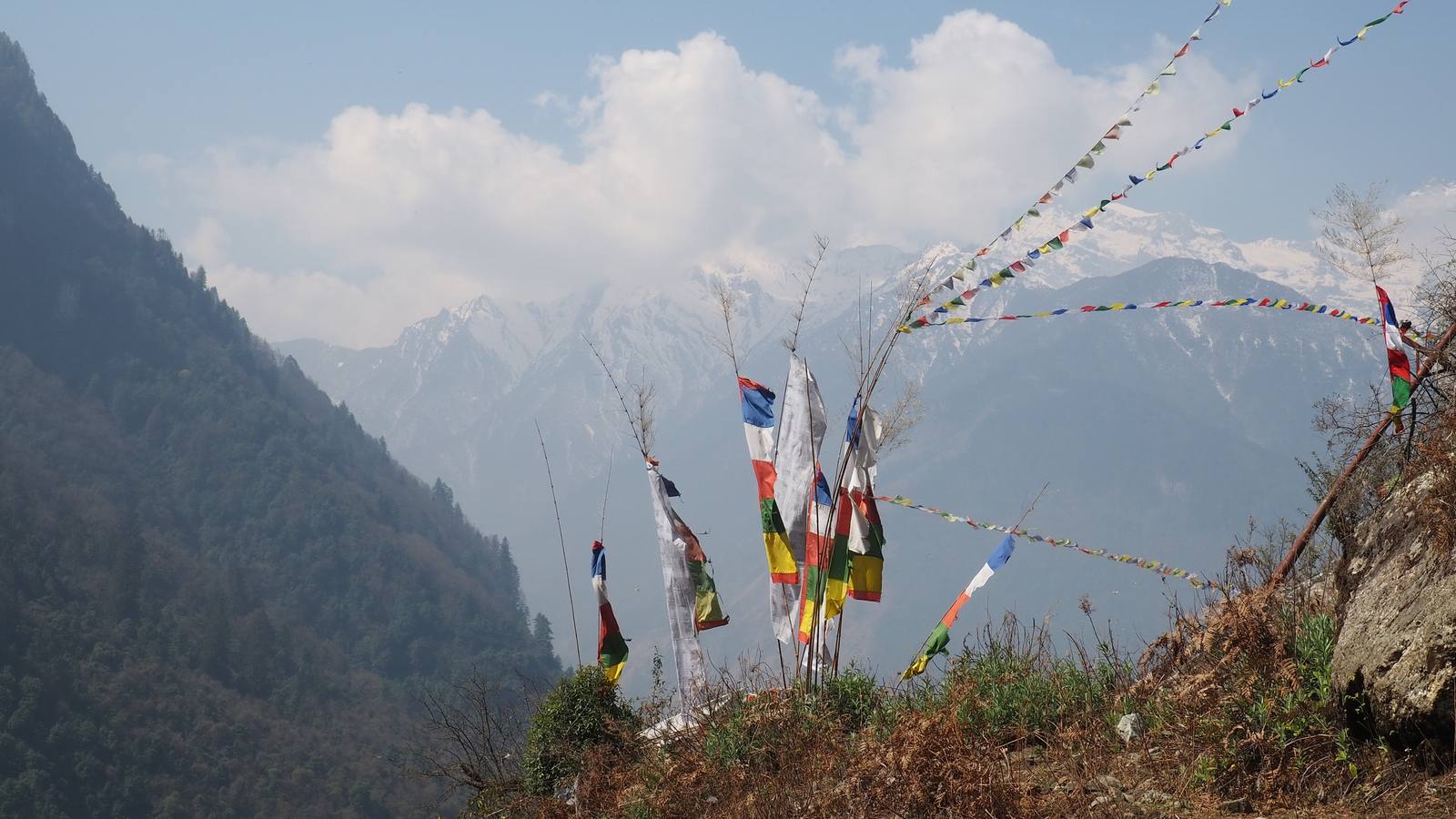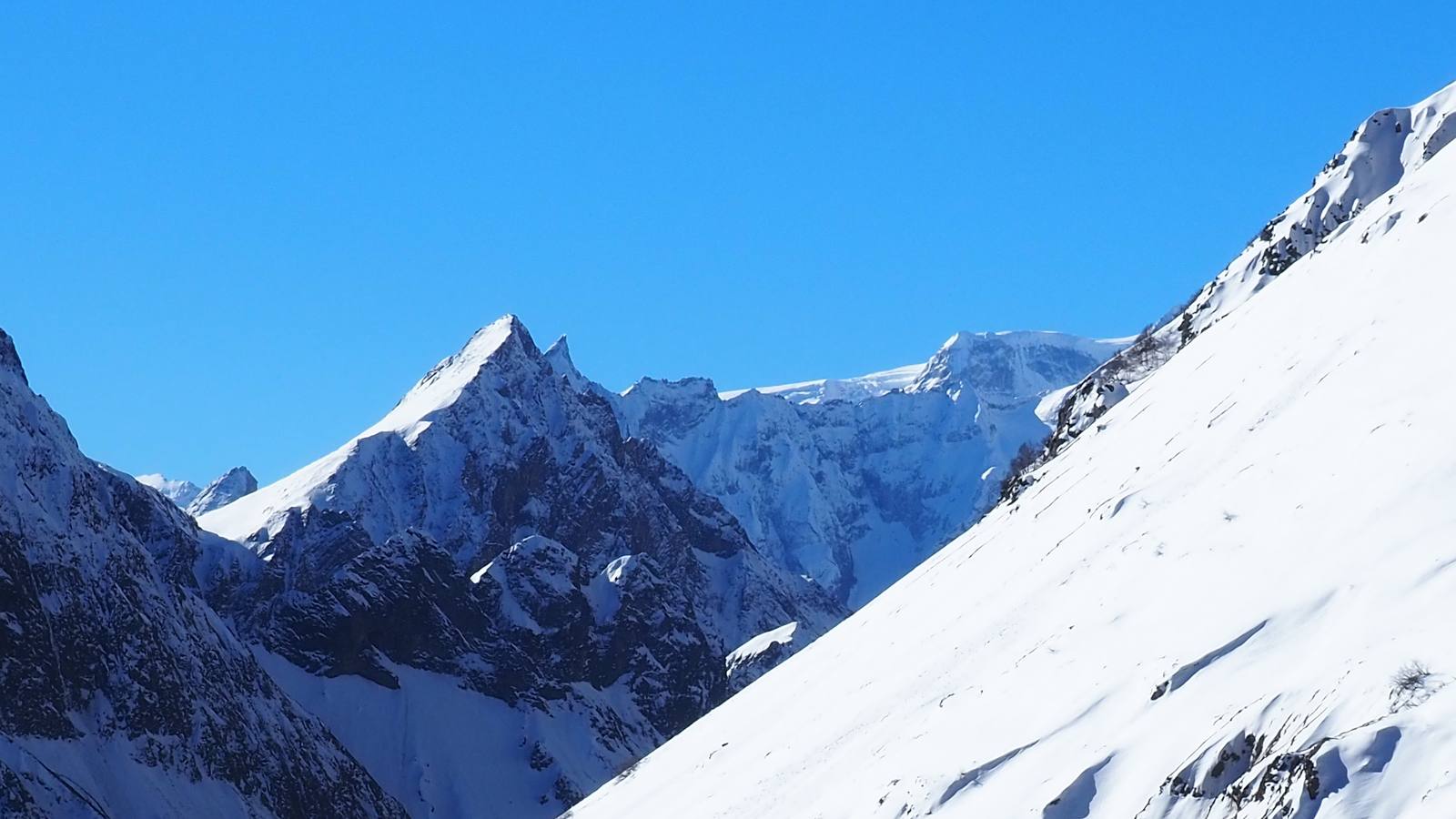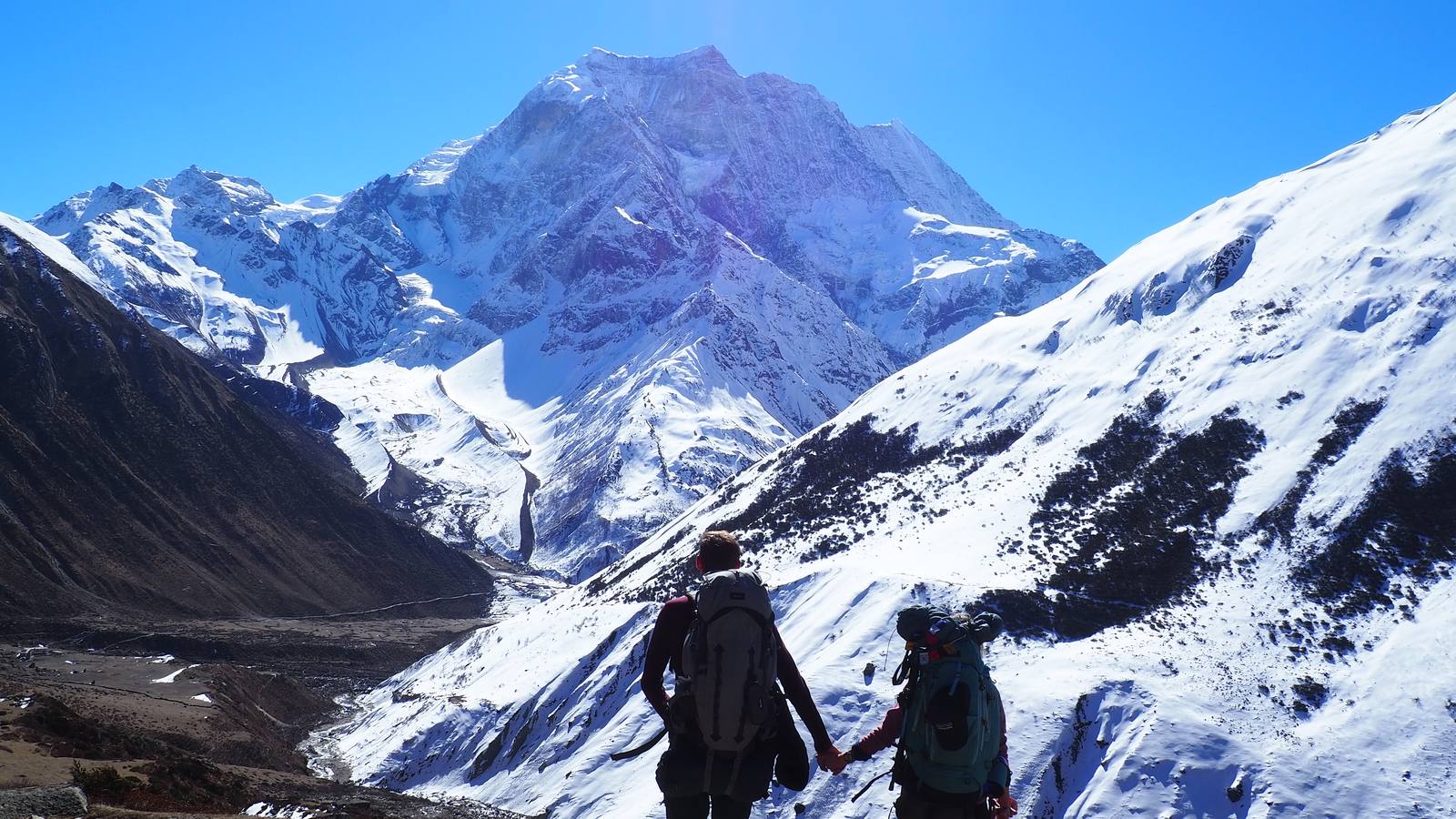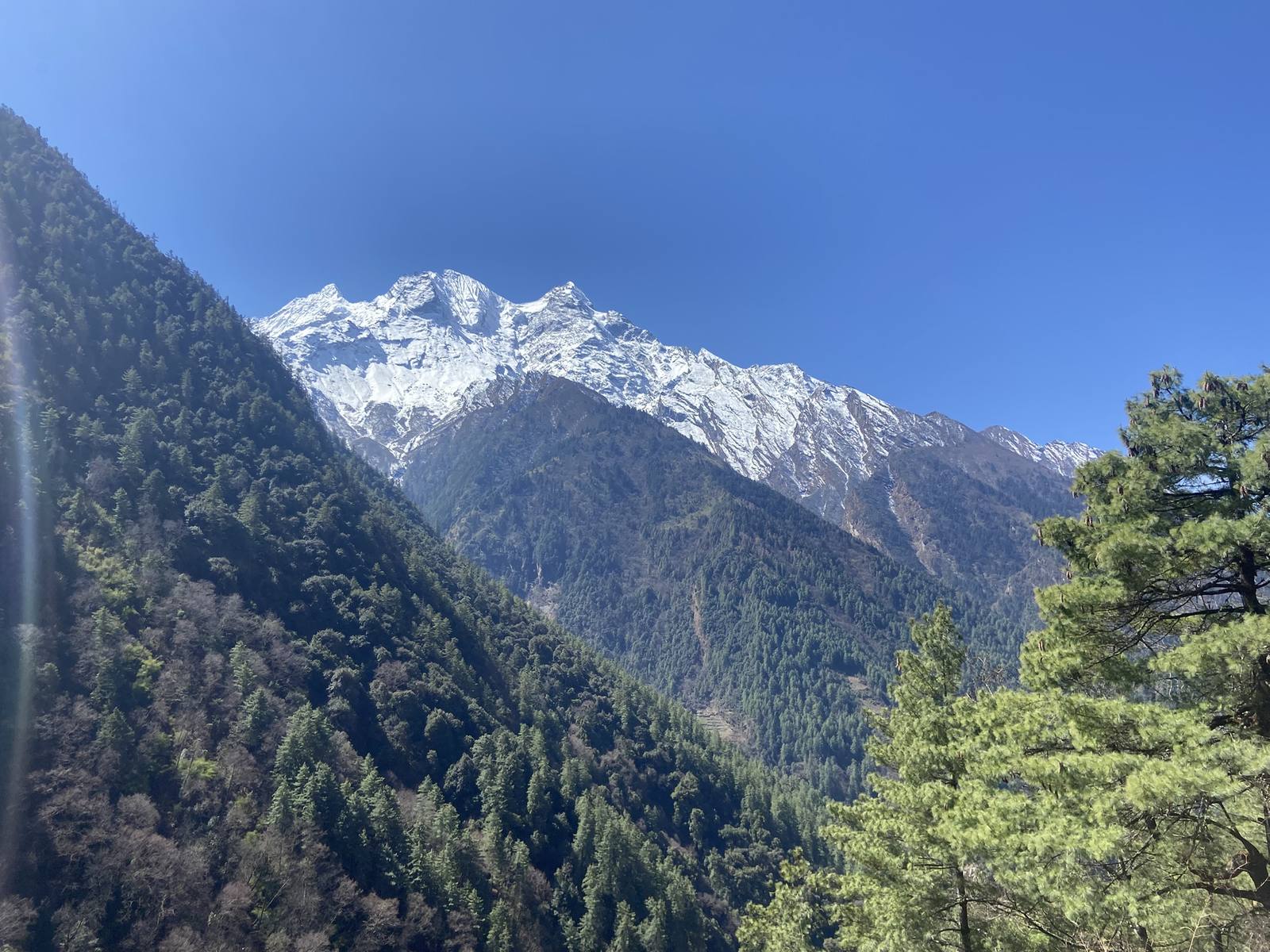
Most treks in the Annapurna region follow river valleys, so you spend a lot of time looking at the sides of hills. The Mardi Himal trail climbs a ridge instead. Once you're above the forest, there's nothing between you and Machhapuchhre, and the view gets bigger with every hour.
It only opened as a teahouse trek in 2012, and it still feels new: smaller lodges, fewer people, and a trail that's steeper and rougher than the routes next door.
The route
You drive from Pokhara to Kande and walk via Australian Camp into the forest, ending the first day at Forest Camp (2,550 m). The second day continues through rhododendron and moss covered oak to Low Camp (2,990 m), where the first proper views open up.
On day three you leave the trees behind and climb the open ridge to High Camp (3,580 m), with Machhapuchhre straight ahead the whole way.
Day four is the big one. You start in the dark, climb to the Mardi Himal Base Camp viewpoint at around 4,500 m for the morning light on Annapurna South, Hiunchuli and the Fishtail, then come all the way back down to Low Camp. On the last day the trail drops steeply through farming villages to Siding, and you drive back to Pokhara.
What makes it different
The view starts early and doesn't stop. On Annapurna Base Camp you wait until the Sanctuary for the big moment. On Mardi, once you're above Low Camp, Machhapuchhre, Annapurna South and Hiunchuli are in front of you every step of the way.
It's quieter. There are fewer lodges and fewer people. In October you'll still meet other trekkers, but nothing like the crowd at Poon Hill or in the Sanctuary.
You get high without staying high. You only sleep above 3,500 m once, and the 4,500 m viewpoint is a day trip from High Camp. That makes Mardi a good first taste of real altitude without committing to a high pass.
Before you book
The base camp day is long. You climb about 900 m and then descend roughly 1,500 m to Low Camp, all in one day. Expect to be walking for most of it, and expect your knees to notice. Trekking poles are strongly recommended. If it's too much, the viewpoint below base camp is a fine place to turn around and still has the view.
Weather on the ridge. Cloud tends to build by late morning, especially in spring, which is why the early starts matter. The ridge is exposed to wind. In winter, snow above High Camp can make the final climb unsafe, and your guide will decide whether you go.
Lodges are simple. Expect shared rooms, basic menus and cold nights higher up. High Camp has limited beds in peak season, so your guide will phone ahead. A sleeping bag and down jacket are provided.
Permits and the guide rule. Mardi is inside the Annapurna Conservation Area, so you need its permit and a licensed guide. Permits are included in the price.
When to go. March to May and October to November. Spring has rhododendrons in the forest, autumn has the sharpest views.
Alone or in a group. Book privately, even if it's just you, or join a group hike that's already planned. The more people on a group hike, the lower the price for everyone, and anyone who paid earlier gets the difference back.
Who it suits, and who should pick something else
Mardi suits fit trekkers who want views on the level of Annapurna Base Camp in less time and with fewer people. It's also a good next step if you've done Poon Hill and want something wilder.
It's not the best choice if you have bad knees or want a gentle first trek. Ghorepani and Poon Hill is much easier on the legs. And if what you're after is standing in a ring of peaks with an eight thousander straight above you, that's Annapurna Base Camp.
But if you want five days of walking towards one of the most beautiful mountains in the world, with room to hear yourself think, Mardi is hard to beat.