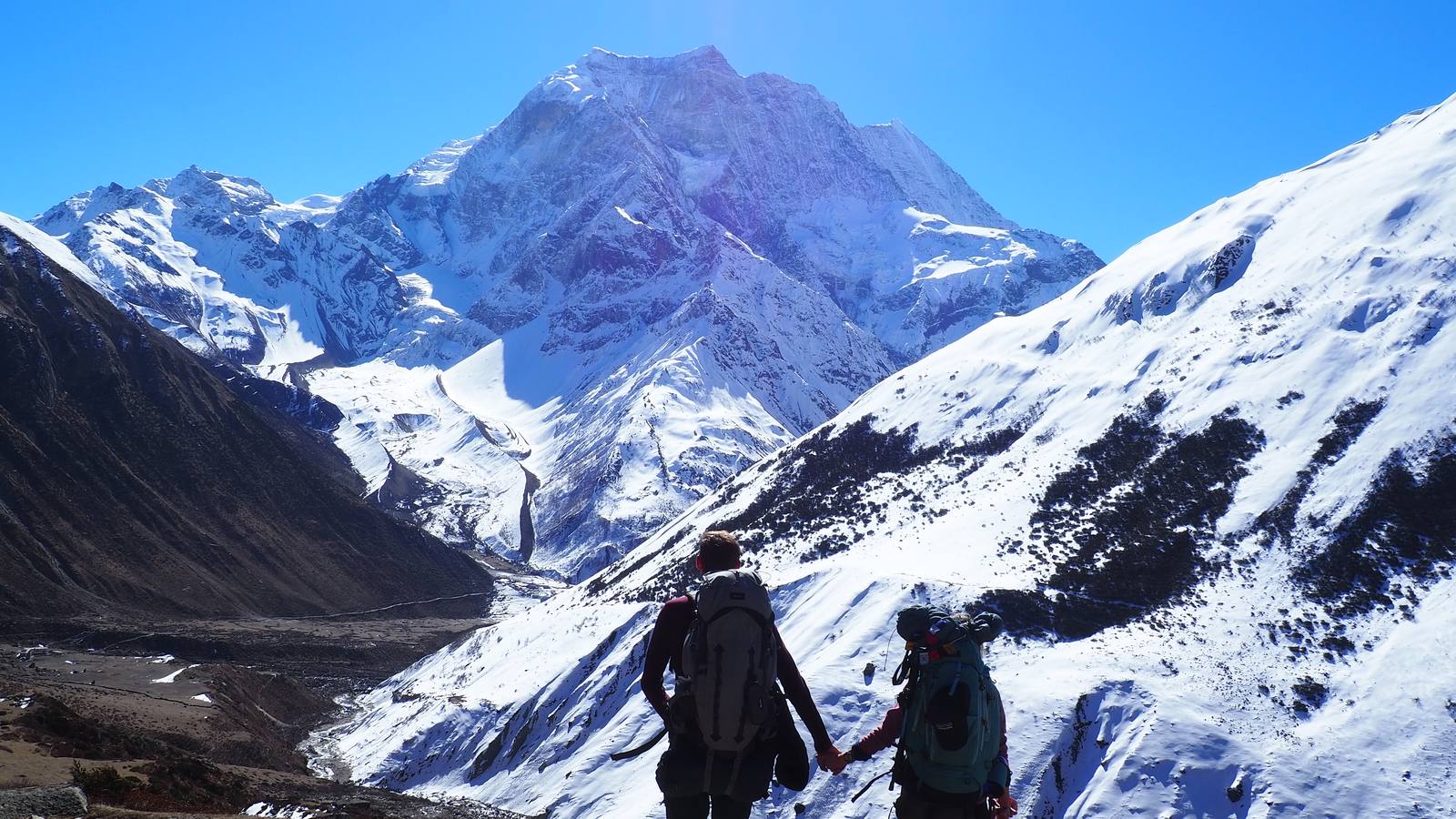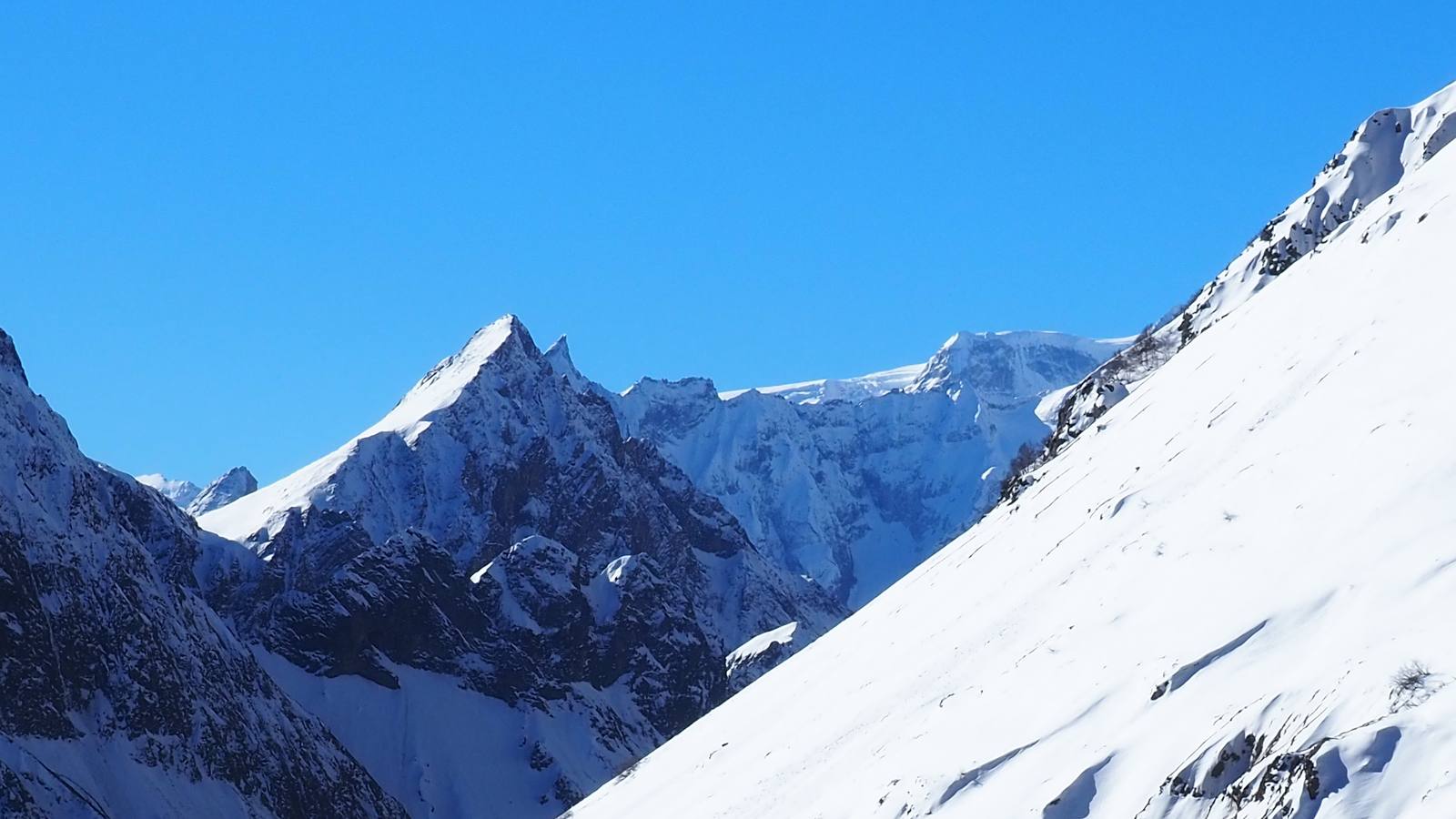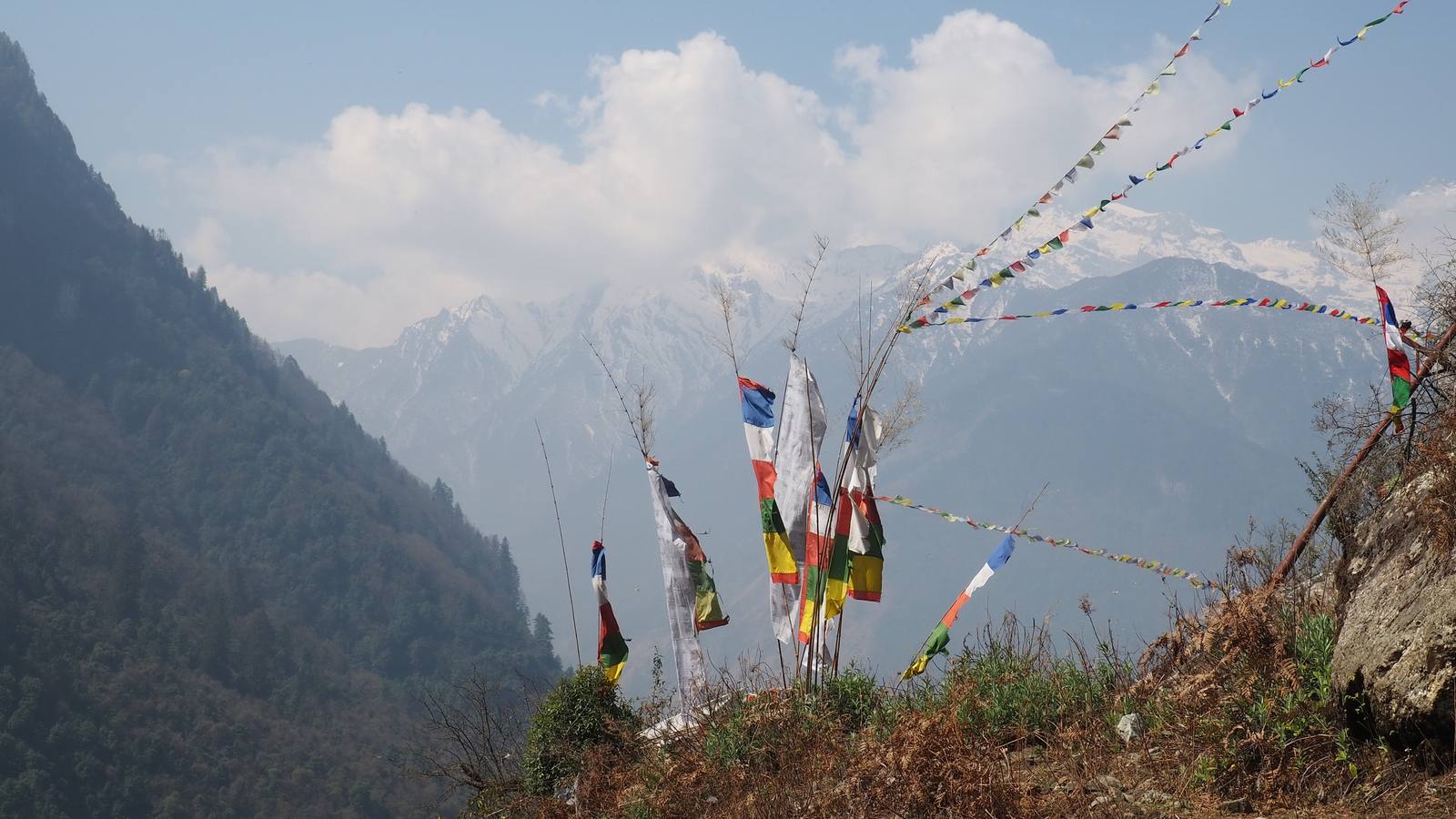
At Lokpa, a few days up the Budhi Gandaki, most Manaslu trekkers carry straight on. A smaller trail turns north into Tsum. The valley was closed to foreigners until 2008, and it still sees only a small share of the people walking the Manaslu Circuit.
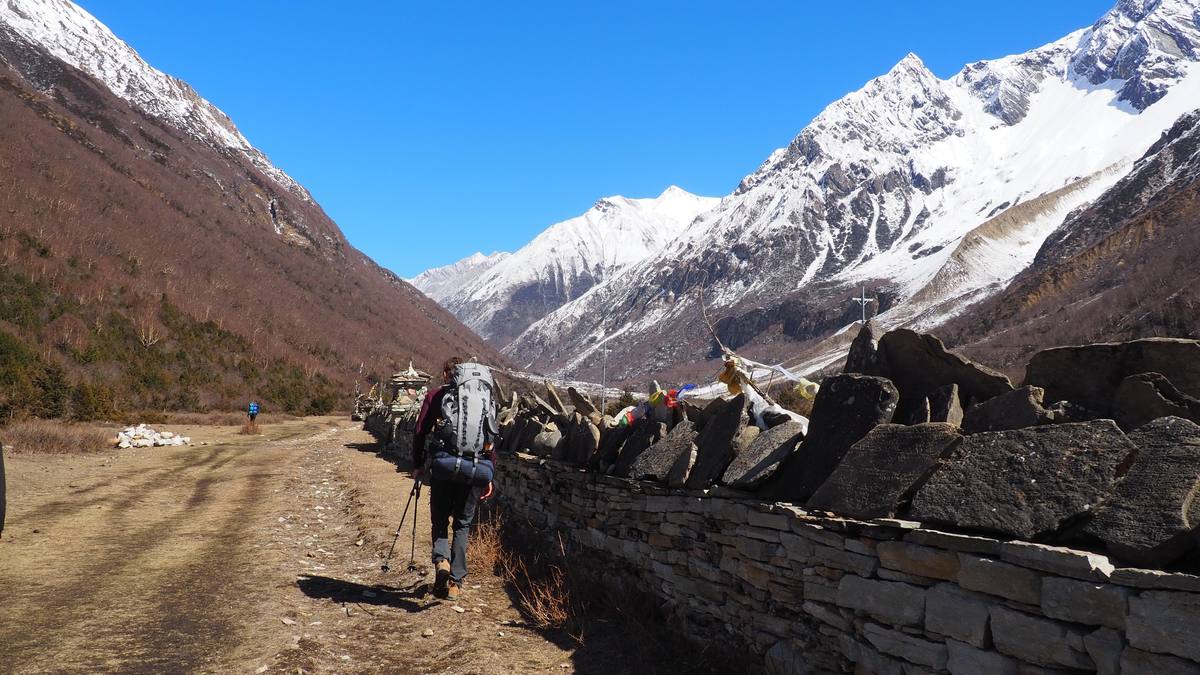
Tsum is a beyul, one of the hidden valleys that Tibetan Buddhist tradition says were set aside as sanctuaries. Whether or not that means anything to you, you'll notice the difference: long mani walls, chortens at every village entrance, monasteries and nunneries that are very much in use, and a pace of life that hasn't been rearranged around trekkers.
The route
The start is the same as Manaslu: a long drive from Kathmandu to Machha Khola, then two days up the gorge to Jagat. At Lokpa (2,240 m) you turn off into Tsum and climb to Chumling (2,386 m) in the lower valley.
From there you climb into upper Tsum. Chhokangparo (3,031 m) sits on an open shelf of fields, and near it is a cave where the Tibetan poet and yogi Milarepa is said to have meditated. Then comes Nile (3,361 m), and finally Mu Gompa (3,700 m), the monastery at the head of the valley, a few hours' walk from the Tibetan border.
On the way back you stop at Rachen Gompa, a nunnery, before retracing your steps down the valley through Chumling and Philim to Machha Khola for the drive back to Kathmandu.
What makes it different
It's a living Buddhist valley. You'll hear morning prayers and pass monks and nuns going about their day. Visitors are welcome if they're respectful: walk clockwise around mani walls and chortens, and ask before photographing people. Your guide will help with the rest.
It's not about altitude. Your highest night is 3,700 m at Mu Gompa, and there's no high pass. The challenge here is distance and remoteness rather than thin air, which makes Tsum a good choice if you want somewhere truly remote but don't want to cross 5,000 m.
Very few people. In some villages you may be the only trekkers that night.
Before you book
Permits and the guide rule. Tsum has its own restricted area permit, and you also need the conservation area permits for the region. Since 22 March 2026 the restricted area permit can be issued to a single trekker, so you no longer need a second person to apply. A licensed guide is still required. Permits are included in the price here.
It's an out and back. You walk the lower Budhi Gandaki twice, once on the way in and once on the way out. Some people find the return days repetitive. If you'd rather not repeat yourself, ask your guide about combining Tsum with the Manaslu Circuit, which adds about a week and the crossing of the Larkya La.
Lodges and homestays are basic. There are fewer lodges than on the main circuit, and some nights may be in family homes. Food is simple (dal bhat, Tibetan bread, potatoes), and charging and hot water aren't guaranteed. Meat is rare: since the 1920s the people of upper Tsum have kept a pledge against hunting and slaughtering animals, and it's respected by visitors too. Your guide brings a sleeping bag and down jacket for you.
When to go. Spring (March to May) and autumn (September to November) are best. Because the valley is lower than the Manaslu pass, the shoulder months can work too. Ask your guide about conditions before you commit.
Alone or in a group. You can book privately, on your own if you like, or join a group hike that's already on the calendar. On a group hike the price drops for everyone as more people join, and anyone who paid earlier is refunded the difference.
Who it suits, and who should pick something else
Tsum suits people who care more about culture than summits, trekkers who've done the Annapurna routes and want somewhere far quieter, and anyone who wants a remote trek without a high pass.
Pick something else if you want big mountain views every day and the satisfaction of crossing a pass. The Manaslu Circuit gives you both, and starts on the same trail.
For a slower, more thoughtful trek, though, Tsum is something special. It's one of the few places in Nepal where you're clearly the visitor and the valley carries on as it always has.